Many children can decode individual words accurately, yet freeze the moment they face a full sentence. If that sounds familiar, you’re not alone – and it’s not just a phonics problem. It’s also a challenge with working memory, attention, stamina, and sentence reading fluency.
In this post, we’ll explore why this journey can be challenging, how to spot when a child is ready, and practical ways to support fluency, phrasing, and confidence.

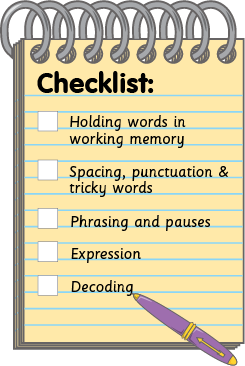
A sentence might look like “lots of words together,” but the brain processes it very differently. Once children begin reading sentences, they suddenly need to manage multiple skills at once:
With single words, children usually focus on just a few letters and then look up. But sentences stretch across the page and require visual tracking. Children need to move smoothly from left to right, continually repositioning their eyes and attention.
A sentence isn’t read in isolated chunks. As children read, they must keep earlier words in their head to make sense of what comes next. For example, understanding “The dog chased the…” depends on holding earlier words in mind while reading on.
Sentences have natural rhythm and include phrases, pauses, and groups of words that belong together. Skilled readers chunk text into these groups, but beginners often read word by word. This makes it harder for children to understand the sentence as a whole.
Fluent reading isn’t flat. It needs expression, including rising intonation in questions, natural pauses at commas, and emphasis on key words. This prosody supports comprehension and makes reading sound like spoken language.
Word lists allow children to focus on decoding only. But in sentences, they also have to figure out the meaning as they go. The need to decode and comprehend changes the task.
Sentences introduce spacing between words, capital letters, full stops, commas and other punctuation. They also contain more tricky words (words that can’t be fully decoded using phonics), which interrupts fluency and requires memory and recognition skills.
Many children can read isolated CVC words but struggle when those words need to be combined into a sentence. Recognising this hidden complexity helps teachers see why sentence reading needs explicit support and lots of practise.
Here are some signs that a child is ready to move beyond reading single words:
If a child can easily read simple CVC words like cat, sun, or mop without a lot of prompting, it shows their phonics knowledge is solid enough for the next step.
Fluency with word lists is a strong sign of sentence readiness. If a child can read a short list of 8–10 words with only a few hesitations, they’re demonstrating stamina, accuracy, and enough working memory to handle sentences.
Early sentences almost always include a handful of tricky words such as the or to. If children recognise these automatically, they’re far less likely to lose momentum or get stuck midway.
A little sounding out is normal, but if a child relies on decoding every single word, they won’t yet have the fluency needed for sentence reading. We’re looking for a balance: decoding when needed, but recognising many familiar words as a whole.
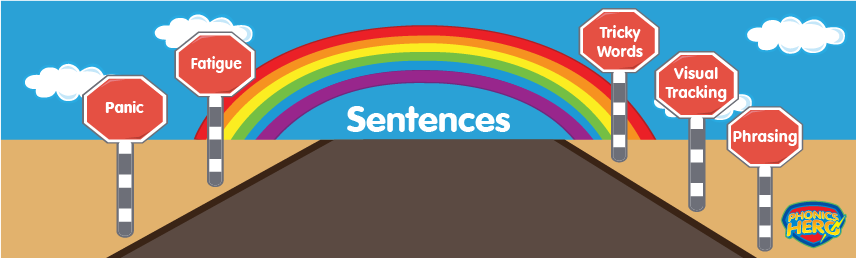
There’s a lot involved in reading sentences and the road to success can have very different obstacles for different children. Below is an easy diagnostic list to help identify what’s really getting in the way.
Some children can decode accurately, but their working memory simply can’t keep up for long.
You might notice:
This isn’t a decoding problem, it’s a stamina and memory load issue.
Early sentences often contain just one tricky word but that can be enough to stop a child in their tracks when reading aloud. When this happens, the tricky word breaks the flow, causing the child to:
If a child reads word… by… word, meaning can quickly disappear. Without phrasing, sentences sound robotic and comprehension suffers even when every word is read correctly.
This can often sound like:
Tracking across a full sentence is much trickier than tracking a single word. Some children lose their place, skip words, or reread the same word multiple times.

This can look like:
For some children, the biggest barrier is emotional. A full sentence looks overwhelming even if they could decode every word. The size of the task triggers anxiety, which can block performance.
You might hear:
Moving from single words to sentences works best in small, manageable steps — starting with short, predictable sentences, using shared reading to reduce pressure, and celebrating small wins.

Word chains (e.g. cat → cap → cup) help children practise reading several words in a row without the added load of sentence meaning, building stamina and visual flow.
Give children 3–5 familiar decodable words. Ask them to read the words smoothly from left to right without stopping between each one. You can then mix the words up and repeat, gradually increasing the number of words in the chain as their confidence grows.
Create a chain where only one sound changes at a time (e.g. cat → can → cap → cup). This helps with accurate decoding while encouraging children to keep their place visually and maintain flow as they move through the chain.

At this stage, children can begin to read full sentences, but only using phonics and tricky words they already know, so the focus stays on fluency and meaning rather than learning the phonics code.
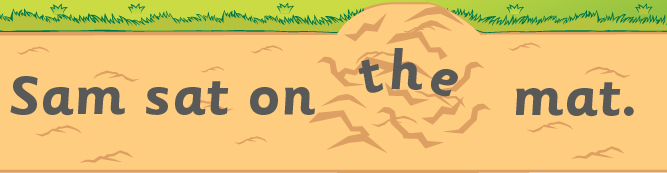
Write or display a short, fully decodable sentence such as “Sam sat on a mat.” Ask them to read the sentence, then check their understanding by asking a simple question like, “Who sat?” or “Where did Sam sit?” This reinforces that sentences are read for meaning, not just accuracy.
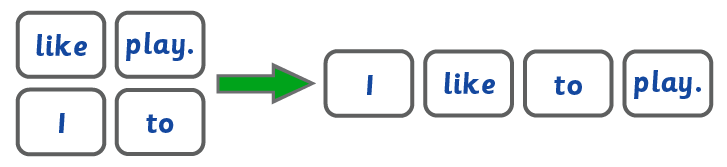
Give children a sentence on word cards and ask them to build it in the correct order before reading it aloud.
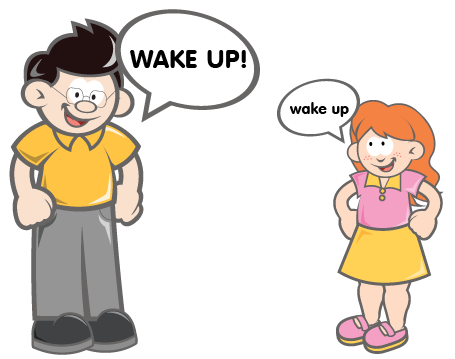
Echo reading allows children to hear what fluent sentence reading sounds like, from a strong model, before they try it themselves.
You read the sentence aloud first, then ask your child to read it back in a quiet “whisper voice.” This lowers anxiety, encourages risk-taking, and allows children to focus on fluency and flow rather than volume or performance.
Chunking helps children move away from word-by-word reading by grouping words that belong together. These “scoops” show children where to pause, helping sentences sound more natural and making meaning easier to hold onto.
Write a short sentence and model drawing curved “scoops” under each phrase (e.g. The dog / is in / the shed). Read the sentence aloud, pausing slightly at each scoop to emphasize the phrasing. Then have the child read it back using the same phrasing.

Repeated reading helps move sentence reading from tricky to automatic.
Ask children to read the sentence once, then say, “Let’s read it again and make it our best read.” On the second (or third) read, encourage smoother phrasing or a more confident voice, praising progress rather than perfection.
Within Phonics Hero, this progression from single words to fluent sentence reading is built into every level. After 40+ games practising single words in isolation, children take their next step – reading sentences at the end of each level.
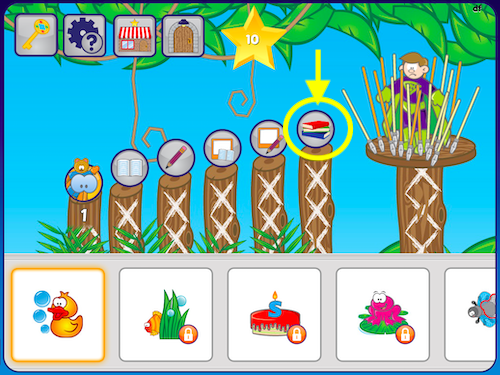 The books icon indicates practising sentences.
At this point in the journey, children work with short sentences and captions. This keeps the focus firmly on sentence-level reading, rather than longer passages of text. Sentences gradually increase in length as confidence and fluency grows, while tricky words are bolded to signal when a different reading strategy is needed. Comprehension demands are intentionally limited so that children can focus on decoding accuracy, fluency, and meaning without unnecessary overload.
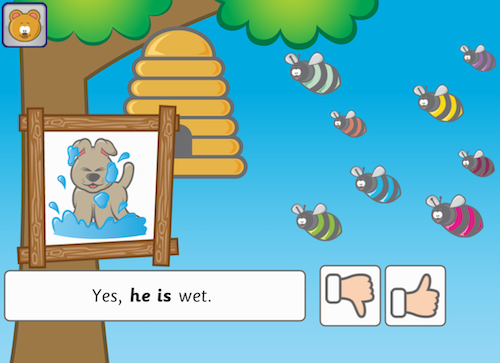 A sample Sentence Reading game.
If you’d like to explore this structured progression in practice, you can get a free Phonics Hero Teacher account. It gives you access to 850 games which includes sentence reading games and activities so you can see how this step-by-step approach supports fluency, phrasing, and confidence in your own classroom.
Every child’s journey to fluent reading looks different – and you play a key role in guiding the way. By recognising when a child is ready, identifying what’s holding them back, and using structured, supportive steps, you help turn a challenging road into a manageable path. With the right support and plenty of practice, children reach their destination – confident, fluent readers.