
Speech sound confusions (in what is heard or said) can be a significant cause of spelling errors. Children are taught in synthetic phonics instruction to represent, in sequence, each of the sounds in a word that they hear. If the child does not hear, say or remember the sounds in a word accurately then spelling mistakes happen. Correcting errors quickly and correctly is important so that the errors do not become practised.
I think that teachers are often more skilled in identifying errors that result from poor recall of how a word looks, a spelling rule or word meaning than in identifying sound-based errors, so this post will identify the common speech sound confusions that teachers can learn to recognise, the causes of these confusions and some practical and simple intervention strategies.

Sound confusion is when a student misspells a word because they heard or said a sound incorrectly. The spelling matches what they heard or said, not the sounds the word contains. Common examples are writing “wif” for “with”, “but” for “bat” or “tar” for “star”.
Sound confusion is evident when the child:
Sound confusion is not the same as letter confusion (e.g. confusion of ‘u’ and ‘n’), homophone confusion (e.g. confusion of ‘here’ and ‘hear’) or incorrect mapping of a grapheme to a sound – code confusion (e.g. ‘fone’ for ‘phone’).
| Error type | What’s happening | Example |
|---|---|---|
| Sound confusion | The student hears or says the wrong sound | “wif” for “with” |
| Letter confusion | The student hears the sound correctly but writes the wrong letter shape | “dig” for “big” |
| Code confusion | The student hears the sound correctly but chooses the wrong grapheme | “fone” for “phone” |
| Homophone confusion | The student picks the wrong spelling for the meaning | “here” for “hear” |
Check whether the student can hear each sound in a word, hear the difference between similar sounds, and say each sound correctly. If the answer to any of these checkpoints is ‘No’, the spelling errors are likely sound-based.
Ask these six questions to find out whether sound confusion is the reason for a child’s spelling errors:
Have the child represent each sound in a word with a counter, finger or dash, then touch each one while saying the sound. This checks both sound identification and working memory.

Show the child minimal pairs (two words that differ by one sound) and ask them to point to the picture of each word, e.g. bag/bug, think/sink.

Have the child repeat the sounds in a word after you, first one at a time, then together as a whole word.

Show the child a letter card and ask them to name the letter. Target the most commonly confused pairs: b/d, p/q, u/n, m/w, i/j, which differ only in orientation. You can reverse this by naming a letter and asking the child to write it.

Say a sound and ask the child to show you a graph/digraph/trigraph/quadgraph for it, using magnetic letters or letter tiles.

You could ask the child to write the grapheme, but this adds another layer of cognitive load. Learn how cognitive load affects young children learning to read. One of the features of English is code overlap – a phoneme may be represented by several graphemes (e.g. the long a sound may be represented by ai, ay, a, a-e, ey, aigh or eigh). Phonetic spellers spell the correct sounds with the incorrect letters. Learn how to teach alternative spellings.
Give the child a word that has a homophone (e.g. ‘pear’). Ask them to draw a picture of it, then write it in a simple sentence.

This post will focus on an appropriate course of action if your answer is ‘No’ to any of the first three questions.
The most commonly confused consonants are voiced and unvoiced pairs such as /p/ and /b/, and sounds made in similar ways such as /f/ and /th/. The most commonly confused vowels are short /a/ and /u/, and short /e/ and /i/. Sounds that are confused are typically sounds that sound alike or are made in a similar way in the mouth. Some sound confusions are common in early speech development.
| Why they’re confused | Sound pair | Example |
|---|---|---|
| Produced in the same way, in the same place in the mouth, but differ in whether or not the vocal cords vibrate | /p/ and /b/ * /f/ and /v/ /s/ and /z/ /t/ and /d/ /k/ and /g/ | “pin” vs. “bin” “fan” vs. “van” “sip” vs. “zip” “tip” vs. “dip” “cap” vs. “gap” |
| Produced in a similar manner but using different parts of the mouth | /m/ and /n/ /t/ and /k/ /d/ and /g/ /s/ and /sh/ | “map” vs. “nap” “tap” vs. “cap” “dame” vs. “game” “see” vs. “she” |
| Similar placement but the air comes out differently | /l/ and /w/ /r/ and /w/ /f/ and /th/ | “let” vs. “wet” “rabbit” vs. “wabbit” “free” vs. “three” |
*Notice that the confusion of the letters ‘p’ and ‘b’ in spelling may be due to a visual discrimination deficit or a sound discrimination deficit. It is important to determine which is impacting the child.
Learn the difference between voiced and unvoiced sounds

Vowels are generally harder to distinguish than consonants, making them easy to confuse when spelling words. The most common vowel confusions are confusion of short /a/ and /u/, and confusion of short /e/ and /i/. Both short /a/ and short /u/ are made with the mouth quite open, but the tongue and jaw position are slightly different.
Short /a/ in “cat” and short /u/ in “cup” side by side: the mouth shapes are almost identical
The word ‘a’ is pronounced by some speakers as long /a/ and by others as short /u/. When a child learns early in spelling instruction that the short /u/ sound is written as ‘a’ it is quite possible that the child will over-generalise and write ‘bat’ as ‘but’. Short /e/ and /i/ are both formed with the mouth quite wide but the width is slightly different for each.
Adding to the confusion, vowel sounds often change with accent and are affected by the consonants before and after them (coarticulation).
The most common speech sound in English, the ‘lazy’ vowel sound /uh/ called ‘schwa’, does not have a dedicated grapheme – it can be represented by any of the vowel letters in an unaccented syllable. Consequently, it is common for children to write the wrong representation in a word (e.g. writing ‘lemin’ for ‘lemon’). Learn more about the schwa sound.
This sort of error does not reflect sound confusion but rather weak visual memory or failure to recognise words related in meaning (e.g. the schwa in ‘relative’ must be spelled with an ‘a’ because of its connection to ‘relate’).
Sound confusion usually comes from one of six sources: hearing loss (including glue ear), auditory processing difficulties, weak phonological awareness, differences between home and school language, speech difficulties, or low working memory. Each needs a different response, so it helps to know which one is affecting the student.


A permanent hearing loss can reduce the ability to hear speech sounds at all, due to decreased perception of loudness, or the ability to distinguish between speech sounds. High frequency loss will make it difficult to hear fricative consonant sounds (hissing or buzzing sounds) such as /f/, /v/, /s/, /th/, /sh/ and /z/ so confusion of these is common. Sounds that have similar mouth formation are difficult to lip read. Young children often experience fluctuating hearing loss due to periodic otitis media (middle ear infection).
The infection makes sounds muffled, often reducing accurate speech sound perception and the ability to distinguish between similar sounds. It sometimes reduces accuracy in articulation. Five out of six children have at least one ear infection by their third birthday (National Institute on Deafness and Other Communication Disorders), so teachers of young children should be alert to changes in performance.
The ears of the child with an auditory processing disorder hear sound normally, but the child’s brain struggles to process or interpret it. This disorder often causes difficulty in distinguishing between similar sounds, especially if there is background noise. It can also cause difficulty in remembering auditory information. Estimates of how many school-age children are affected vary widely, from under 1% to around 6%, because there is no agreed way to diagnose it (American Speech-Language-Hearing Association).

The child with poor phonological awareness (the ability to hear and play with the sounds in words) often has difficulty identifying and manipulating individual speech sounds despite normal auditory functioning. The child may confuse sounds, mix their order when blending or omit sounds. A phonological awareness deficit is the major cognitive risk factor for dyslexia, which is estimated to affect around 10% of Australians (Australian Dyslexia Association).

Sound confusion for children who have English as an additional language or dialect (EAL/D) typically occurs when their native language does not contain certain English sounds. English has a large number of vowel sounds (14–21 depending on dialect) compared to languages like Spanish or Japanese.
English contains sounds (like certain vowel shifts) not found in many other languages. Substitution or the dropping of a sound is quite common e.g. speakers of East Asian languages often confuse /r/ and /l/. Plural endings are often omitted by English learners.

Sound confusion by the child with articulation difficulties is typically evident when the child consistently substitutes, omits, distorts or adds specific speech sounds as a result of difficulty correctly forming those sounds. (Speech therapists use the acronym SODA (Substitute, Omit, Distort, Add) for errors). The most common articulation errors are heard in the production of consonant sounds:


Low working memory in children often leads to sound confusion because the brain struggles to hold onto and process speech sounds while working on a task such as spelling. This is particularly evident in children with low verbal or phonological working memory.
The longer the child has to hold information in working memory, the more likely it is that an error will be made, so the child’s verbal processing speed will have a significant impact on working memory. Omission of a sound in a consonant cluster is quite common.
Investigate if sound errors continue past age 5, especially with early-developing consonants such as /p/, /b/, /m/, /d/ and /n/. Later sounds, like /th/, can still be developing into Year 2.
Sound confusions, like letter confusions, are a normal part of child development. Occasional letter reversals such as b/d are normal up to the age of 7 as young brains are still developing visual orientation skills and spatial awareness. A child’s speech sound development continues for around 7 years as the muscles of the child’s articulators (lips, teeth, tongue) develop and the child learns how to make all of the movements needed to produce each of the 44 sounds of the English language. There is a common progression in acquisition and production of speech sounds. See the chart below.
| Child’s Age | Sounds The Child Can Say |
|---|---|
| 2–3 years | Able to say the sounds: p, b, m, d, n, h, t, k, g, w, ng, f, y in words. |
| 4 years | Able to say the sounds: l, j, ch, s, v, sh, z in words. The child may still be making mistakes on: s, sh, ch, j, ng, th, z, l, and r. |
| 5 years | Able to say r, zh (e.g. ‘measure’), th (voiced – e.g. in ‘that’ and ‘there’) |
| 6 years | Able to say a voiceless th (e.g. in ‘thunder’ and ‘thick’) |
Adapted from Talkshop. Read Talkshop’s guide to which speech sounds children can say at each age
The last two chart elements explain why you may see a child spell or read ‘with’ as ‘wif’ even in Grade/Year 2 – the /th/ is the last sound to develop.
In typical development, many childhood sound confusions resolve naturally over time. If the sound errors continue past the age of 5, especially for the consonants that develop first, investigation of the cause is necessary (start with your school’s learning support or special needs coordinator, or a speech and language therapist). If the confusions are due to hearing loss, a speech disorder or a neurobiological disorder such as dyslexia, a specialist is usually needed.
Some sound confusions are the result of a speech disorder rather than normal development. These usually need support from a speech and language therapist.
The three most common speech disorders are:
The usual go-to fixes rarely help with sound-based errors, because the problem is how the student hears or says the sound, not how carefully they write. Teachers often try:
None of these strategies address the root cause of the sound-based spelling error.
Effective strategies include mouth pictures and mirrors, Cued Articulation, minimal-pair games, phoneme spotting, word chains and sound walls. They all work on the same principle: Help children to make the connection between the mouth appearance of a challenging sound, the feel of the sound and the way the sound is heard.
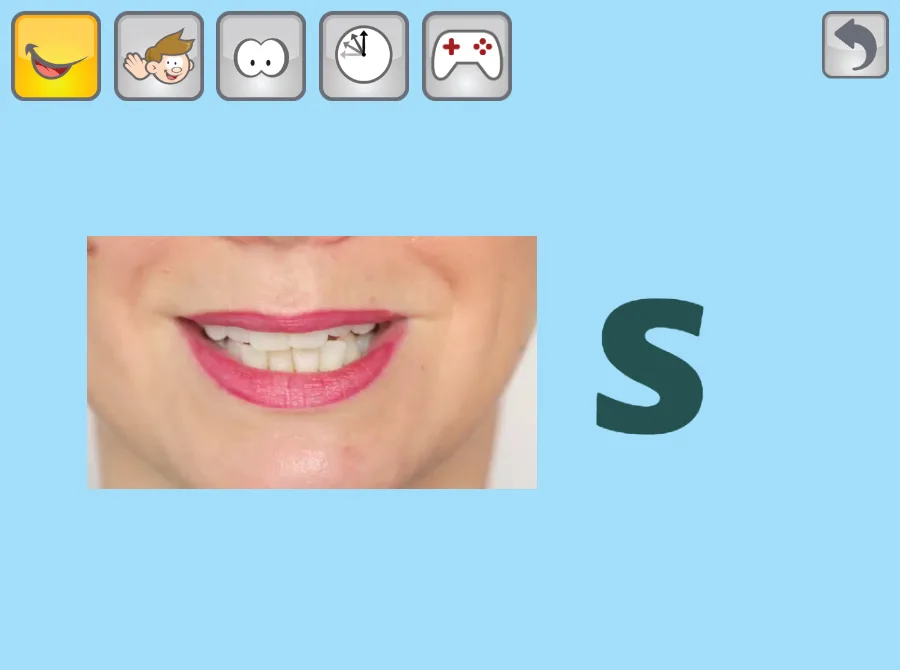

How to use Cued Articulation hand cues for each sound

Introduce vowels in an order that keeps them distinct, contrast them in minimal pairs, and use mouth-based mnemonics and the Vowel Valley diagram.
Vowel sound accuracy is a good predictor of longer-term spelling difficulties, so it’s worth targeting early.
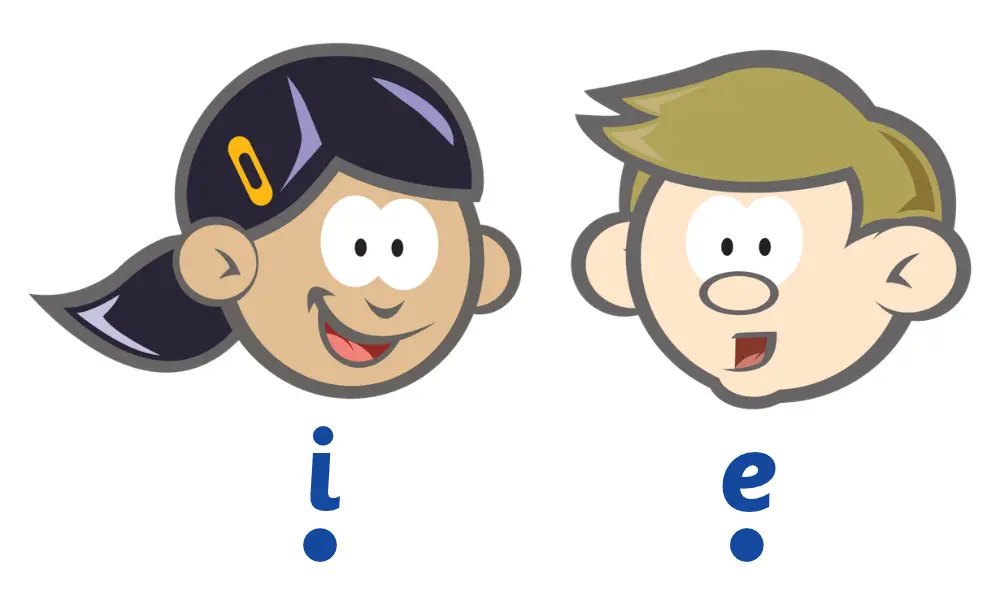
Use a mnemonic to reduce short vowel confusions. Have children repeat the rhyme “/i/ makes you grin, /e/ drops your chin” to reduce short i/e confusion.
To reduce short a and u confusion you can use a visual mnemonic featuring fruit and nuts. For /a/, the mouth should be open for a big bite of an apple. For /u/, the mouth should only be open for the bite of a nut.

It is important to address spelling errors early and in the right way, so I encourage you to use the checklist provided and use some of the strategies I’ve shared that explicitly reduce sound confusions in spelling.
Often, yes. The /th/ sound is one of the last to develop, and many children can’t say a voiceless /th/ until around age 6.
It can be either. Check whether the student can hear and say the two sounds differently, and separately whether they can tell the letters apart.
Short /a/ and short /u/ are made with a similar open mouth. Some students also over-generalise from the article “a”, which many people pronounce /uh/.
Yes. Middle ear infections muffle sounds, making similar sounds hard to tell apart. Most children have at least one ear infection by age 3.
If sound errors continue past age 5, especially with early-developing consonants, investigate the cause. Hearing loss, speech disorders and dyslexia usually need specialist support.
No. That is a schwa error, caused by weak visual memory of the spelling of schwa in a particular word, not by mishearing the sound.